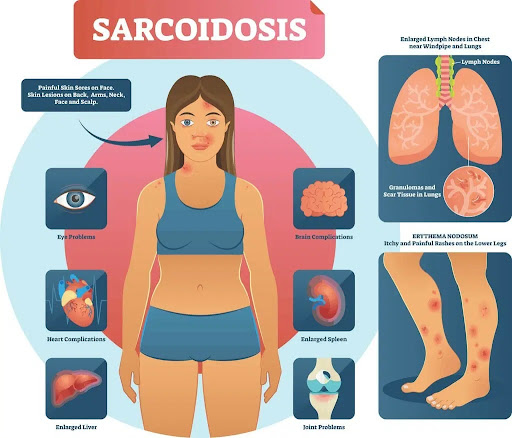
Sarcoidosis is an inflammatory disease characterized by the growth of tiny collections of inflamm…
Sarcoidosis is an inflammatory disease characterized by the growth of tiny collections of inflammatory cells (granulomas) in various parts of the body—most commonly the lungs and lymph nodes. These granulomas can affect organ function and cause a range of symptoms. The exact cause of sarcoidosis remains unknown, but researchers believe it results from an abnormal immune response to an unidentified trigger in genetically susceptible individuals. It most commonly affects adults between 20 and 40 years of age. Pulmonary sarcoidosis may present with:
Persistent dry cough Shortness of breath Chest discomfort Fatigue Unexplained weight loss Night sweats
Dr. Ashwin Yadav approaches sarcoidosis diagnosis through a combination of medical history, physical examination, chest X-rays, pulmonary function tests, and sometimes tissue biopsy to confirm the presence of granulomas. Many cases resolve spontaneously within 2-3 years without treatment. When treatment is necessary, corticosteroids remain the primary option to reduce inflammation. Other immunosuppressants may be used in cases that don't respond to steroids. Regular monitoring is essential as sarcoidosis can affect multiple organ systems and may recur after treatment. #Sarcoidosis #LungGranulomas #AutoimmuneDisease #DrAshwinYadav #PulmonologistAgra #RareDisease #LungSpecialist #ChronicDisease #RespiratoryMedicine #ImmuneSystem